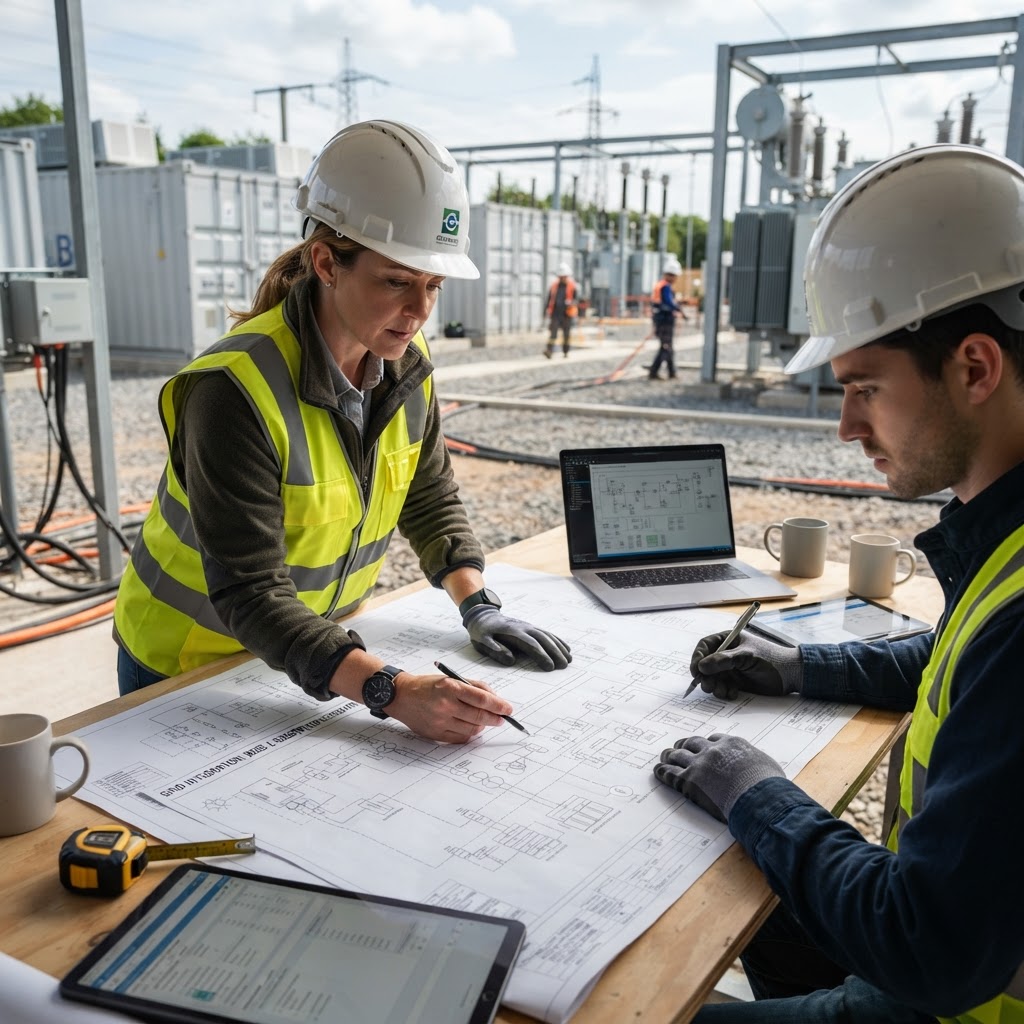
The Paradox of Production: Navigating the 2026 Energy Landscape
As of July 2026, the energy industry finds itself in a state of profound contradiction. Despite U.S. oil and gas production hitting all-time highs, industry employment has plummeted to 2026 lows U.S. Oil and Gas Jobs Hit a 2026 Low Even as Production Sets Records. This phenomenon is not merely a byproduct of automation; it is the direct result of relentless energy sector consolidation. For firm leaders, this creates a unique, albeit high-stakes, opportunity. While mid-level and senior professionals are being displaced by mergers and streamlined corporate structures, the broader AEC landscape is experiencing an insatiable demand for the very skill sets these individuals possess. Transitioning your top-tier talent from the volatile oil and gas sector into the long-term, stable environment of infrastructure hiring is no longer just a retention strategy—it is a competitive necessity.
Engineering recruitment must evolve to recognize that a PMP-certified project manager in the oil fields possesses transferable skills that are perfectly suited for complex public works jobs. The technical rigor required to manage multi-million dollar pipeline projects is, in many respects, directly analogous to the oversight needed for water and wastewater projects or high-voltage power transmission upgrades. By ignoring this potential talent pool, firms are leaving billions in project capacity on the table. The key lies in understanding that this is not a permanent loss of expertise, but rather an impending workforce transition that, if managed correctly, can bridge the widening gap between supply and demand.
The Resilient Alternative: Where Durable Work Still Lives
While the energy extraction sector experiences cyclical contraction, the public works and infrastructure markets remain characterized by extreme durability. Recent market analysis confirms that Infrastructure Construction Demand in 2026: Where Durable Work Still Lives is driven by long-term federal and state funding, ensuring that projects like water treatment plants, regional highways, and large-scale power grids continue to move forward regardless of commodity price volatility. This environment provides the stability that many experienced engineers and construction managers are currently lacking in the O&G sector.
Leaders must proactively map the skills of their displaced workforce to these roles. For instance, a lead mechanical engineer who has spent a decade overseeing gas processing facilities likely already understands the intricacies of fluid dynamics, pressure systems, and regulatory compliance that are essential for large-scale water treatment facility upgrades. These individuals are not just looking for a paycheck; they are looking for project longevity. By framing the move from energy to civil infrastructure as a prestigious career pivot rather than a demotion, firm leaders can capture specialized talent that would otherwise gravitate toward unrelated sectors or early retirement. To understand how these transitions are impacting the market, you should explore AEC salary benchmarks to ensure your compensation packages are aligned with the new competitive realities of the sector.
Skills Transferability: The Bridge Between Energy and Civil Engineering
Success in engineering recruitment today requires a deep understanding of core competencies that transcend industry silos. When looking at the workforce transition from energy to infrastructure, we must look past industry-specific terminology to the underlying technical tools and certifications. An engineer fluent in Primavera P6 for scheduling, Revit for BIM coordination, or holding a PE (Professional Engineer) license is already 80% of the way toward being a top performer in the water and power infrastructure sectors. The remaining 20%—specifically the nuances of OSHA 30 compliance in public works versus O&G-specific safety standards, or the regulatory landscape of the Clean Water Act—is easily taught.
"The most successful firm leaders in 2026 are those who view talent as an asset class that can be redeployed across shifting market demands, rather than a fixed overhead cost that rises and falls with commodity prices."
We often see that senior project leaders, particularly those with LEED AP or equivalent sustainability certifications, are highly effective when moved into renewable-integrated public utility projects. These professionals bring a culture of safety, efficiency, and document control that is often more disciplined than those who have only worked in municipal civil projects. If your firm is struggling to find the right leadership for upcoming projects, you might consider reaching out to submit your search to align your recruitment needs with the incoming surge of displaced energy sector talent.
The Geography of Opportunity: Where Hiring is Happening
Infrastructure hiring is not uniform across the United States. In 2026, we are seeing massive concentrations of demand in specific metro areas that are essentially 'infrastructure hubs.' States like Texas, Arizona, and the Carolinas—often formerly considered just O&G or tech hubs—are now leading the charge in public works and power grid modernization. As energy sector consolidation forces talent out of traditional hubs like Houston or the Permian Basin, firms in the Pacific Northwest and the Mid-Atlantic can capitalize by offering stable positions in public infrastructure.
According to the Bureau of Labor Statistics — Architecture & Engineering, the demand for civil and environmental engineering talent remains consistently higher than the supply, particularly for those willing to relocate for project-based roles. Furthermore, BLS — Construction Sector Employment data suggests that the sector has remained robust despite broader economic headwinds. This is the perfect window to recruit talent that is currently 'on the bench' due to mergers. If you are operating in regions experiencing high levels of infrastructure investment, you should view the AEC Talent Index to ensure you are benchmarking against the right geographic cohorts.
Contrarian Insight: Why Specialization is Hurting Your Hiring
Most firms make the mistake of hiring for narrow 'industry experience.' They insist on a candidate having 10 years of specific experience in water treatment, rejecting a perfectly qualified mechanical engineer from the gas sector who has 15 years of experience in high-pressure pumping systems. This is a massive mistake. The technical similarities between a natural gas compressor station and a municipal water pumping station are far greater than the differences.
By demanding specific 'sector experience' in a period of such tight labor availability, you are essentially selecting yourself out of the market. The firms that will dominate in 2027 are those that hire for technical capacity, problem-solving, and leadership, while treating sector knowledge as a secondary variable that can be filled by existing internal training programs. When you pivot your recruiting to look at a candidate's 'engineering DNA'—their command of safety, their ability to lead cross-functional teams, and their proficiency with tools like Primavera P6 or Civil 3D—you gain access to a talent pool your competitors are currently ignoring.
Conclusion: Building for the Future
The 2026 labor market is a tale of two sectors: one defined by the volatility of consolidation and the other by the stability of long-term public works. As a firm leader, your task is to act as the bridge for high-caliber talent that has been displaced by industry consolidation. By focusing on the cross-training of oil and gas professionals, you aren't just filling seats; you are importing a culture of high-stakes, data-driven execution into your civil and power infrastructure teams.
Infrastructure hiring is arguably the most critical component of the next decade of American development. The professionals you recruit today will be the ones leading the charge on the power grids, water systems, and transportation networks that will sustain the economy for the next thirty years. Don't let your firm get left behind because you were looking for an industry-specific resume rather than a project-ready leader. Now is the time to optimize your internal hiring strategy and ensure you have the talent in place to handle the massive backlog of projects hitting the market this year.
Sources & Further Reading
- U.S. Oil and Gas Jobs Hit a 2026 Low Even as Production Sets Records - Oil & Gas Journal, July 19, 2026
- Infrastructure Construction Demand in 2026: Where Durable Work Still Lives - Construction Dive, July 14, 2026
- Bureau of Labor Statistics — Architecture & Engineering
- BLS — Construction Sector Employment
Luxus Group Research Team
AEC Industry Research