The Illusion of Availability in Today's Labor Market
As of July 2026, the construction sector is facing a paradox that is confounding even the most seasoned executive leadership. While industry reports confirm that Construction job openings hit a 10-month high in May, firms are finding that these open reqs are not translating into boots on the ground or seats filled at the project management table. The headline numbers suggest a robust market, but for general contractors and EPC firms, the reality is a persistent labor shortage that threatens to erode project margins and delay critical timelines across commercial and mission-critical segments.
Many firms continue to lean on legacy, broad-based recruitment strategies—posting generic ads on job boards and waiting for a tide of talent that simply isn't rising. This 'spray and pray' methodology is no longer merely inefficient; it is a liability. In an environment where the demand for high-stakes infrastructure and data center construction is skyrocketing, failing to distinguish between generalist labor and the highly specialized experts required for complex builds is a recipe for operational gridlock. The market is not suffering from a lack of people; it is suffering from a profound mismatch in specialized capability.
The Data Center Boom and the New 'Specialized Trade' Imperative
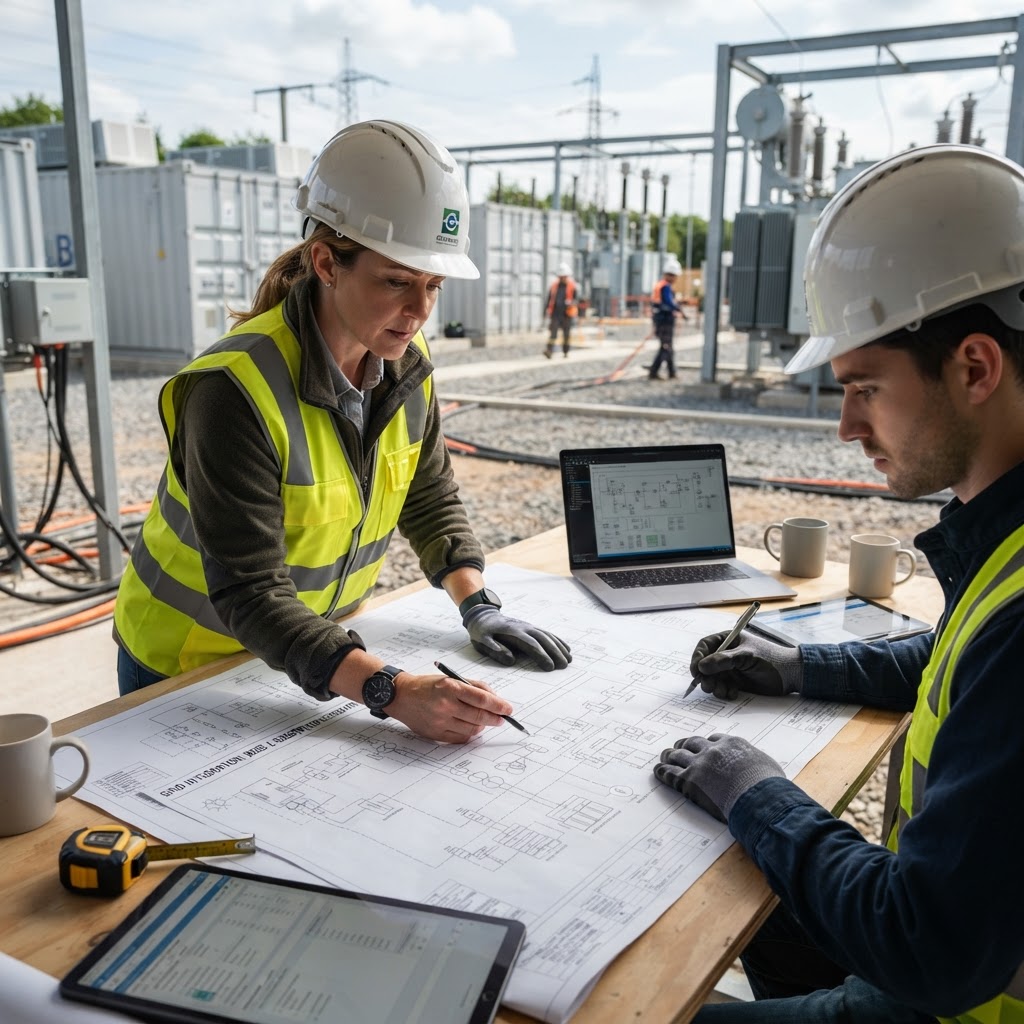
The driving force behind today's labor volatility is the unprecedented scale of the data center and semiconductor fab build-out. These projects are not traditional commercial developments; they are hyper-complex ecosystems that require a mastery of MEP coordination, power distribution, and precision scheduling that many traditional contractors are not equipped to deliver. When we look at the Associated General Contractors of America (AGC), their ongoing efforts to highlight workforce development underscore the reality that the skills gap is widening precisely where it matters most: in the trades that build the digital backbone of the modern economy.
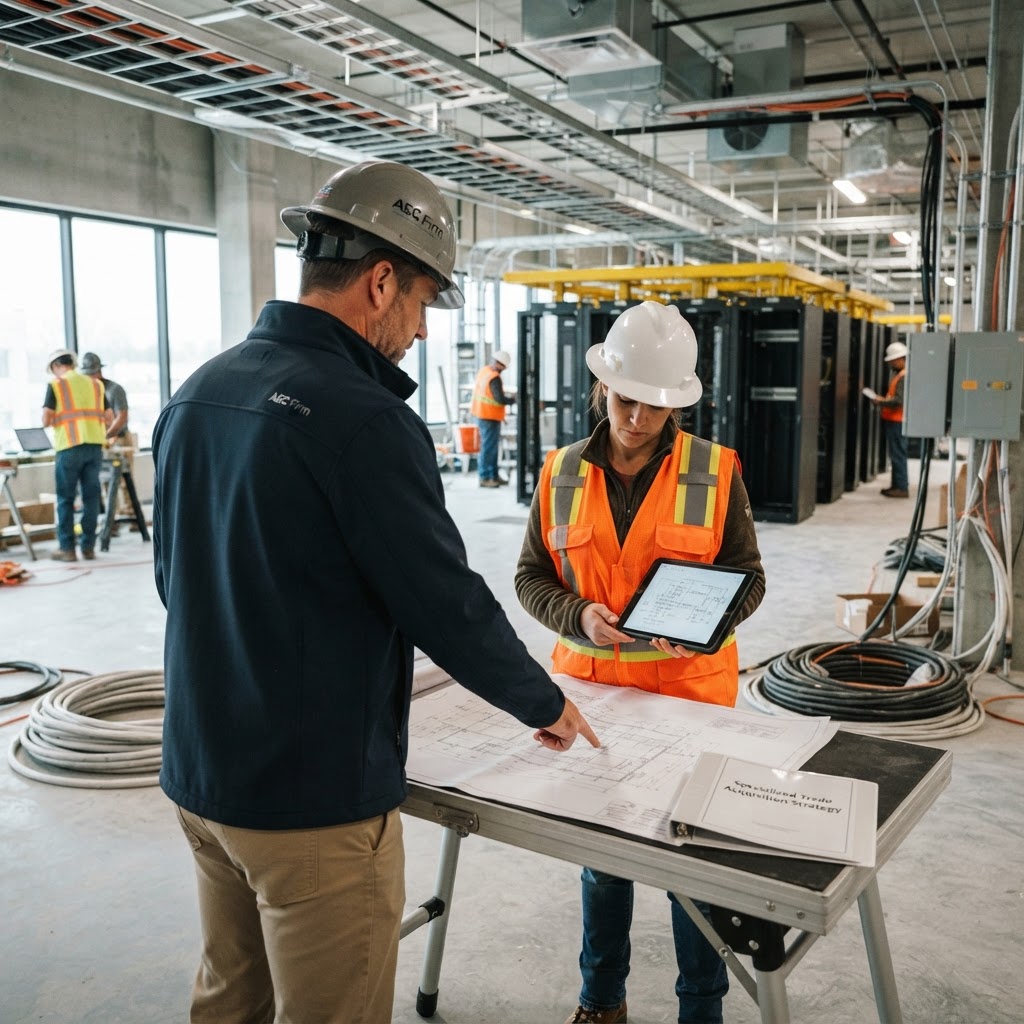
Generic hiring strategies fail here because they lack the granular focus required to vet for the specific certifications that projects now demand. Whether it is an electrical superintendent with a deep understanding of high-voltage switchgear for a data center or a mechanical project manager proficient in Revit and BIM modeling for mission-critical cooling systems, the criteria for success have shifted. If your recruitment team is looking for a 'Project Manager' without assessing their specific experience in mission-critical environments, you are fundamentally misallocating your capital. To truly explore AEC salary benchmarks, one must look at the premium attached to these niche skill sets, as they represent the difference between a project that closes on time and one that faces multi-million dollar penalties.
Mid-Year Realities: Why Generic Recruitment Is a Margin Killer
The Labor Shortage Deepens, Design Work Retreats: 2026 Mid-Year Forecast Signals Tougher Market Ahead report paints a stark picture for the remainder of the year. With 52% of firms citing the talent gap as their primary bottleneck, the traditional approach to filling project teams is failing at the exact moment that margins are tightening. When you apply a one-size-fits-all hiring strategy to a specialized project like a water treatment plant or a large-scale renewable energy facility, you are not just missing out on talent; you are inviting inefficiency.
The most successful firms in 2026 are those that have completely abandoned the concept of the 'generalist' hire. By prioritizing candidates with specific certifications such as PMP, Primavera P6 proficiency, or OSHA 30 standards, these firms reduce the costly onboarding ramp-up period that keeps critical infrastructure projects stalled.
Consider the geography of these needs. In hubs like Phoenix, Northern Virginia, and parts of the Pacific Northwest, where data center construction is hyper-saturated, firms that treat recruitment as a precision exercise are winning. They are not waiting for candidates to find them; they are utilizing data to identify passive talent with specific experience in semiconductor fabs or complex power infrastructure. If you are struggling to fill these roles, it is time to submit your search to a strategy that prioritizes quality over applicant volume.
Bridging the Gap: Where AIA Standards Meet Site Reality
The American Institute of Architects (AIA) has long emphasized the interconnectedness of design and site delivery. In 2026, this link is more vital than ever. The failure to integrate architects who understand the constructability of complex infrastructure with the field teams executing those designs is a common point of failure. When hiring for architecture, firms are finding that those with a dual focus on creative design and field-proven experience—often documented by a LEED AP credential—are the most effective at managing today’s complex project sites.
If your firm is still hiring based on a five-year-old job description, you are effectively ignoring the evolution of the industry. The 'construction workforce' of 2026 needs to be conversant in digital delivery, agile project management, and high-performance safety standards. Without this, your hiring strategy is not just stagnant; it is actively working against your business goals. You can view the AEC Talent Index to see that the compensation premiums for these specific, high-demand skills are rising in direct proportion to their scarcity.
The Contrarian View: Why You Should Stop Hiring 'Experience'
Most hiring managers prioritize years of experience as their primary metric for success. However, in the high-growth segments of data center construction and renewable energy, this can be a strategic error. A candidate with twenty years of experience in low-complexity multifamily housing may be significantly less valuable than an engineer with five years of direct, high-intensity experience in mission-critical MEP systems. This is the 'experience trap.'
To move forward, firms must adopt a 'capability-first' mindset. Instead of looking for a project manager who has 'seen it all,' look for one who has specifically navigated the logistical nightmares of high-stakes infrastructure, from supply chain shortages to complex local permit requirements. The firms that are currently winning the war for talent are those that ignore traditional tenure metrics in favor of technical mastery and demonstrable project impact. They are looking for, and paying for, individuals who have successfully commissioned a data center or managed the lifecycle of a high-capacity transmission line.
Conclusion: Moving Toward a Targeted Future
The data is clear: job openings in our industry remain at a 10-month high, but the generic path to filling them has become a dead end. As we look toward the second half of 2026, the firms that protect their margins will be those that treat AEC recruitment as a core operational strategy, rather than a back-office administrative task. By shifting your focus toward specialized trades, investing in granular vetting for mission-critical experience, and abandoning the antiquated 'experience-only' hiring model, you can secure the workforce necessary to meet the demands of the current infrastructure surge.
Stop waiting for the labor market to 'normalize.' The current landscape is the new baseline. Start treating your human capital with the same level of analytical rigor you apply to your physical infrastructure assets.
Sources & Further Reading
- Construction job openings hit 10-month high in May - Construction Dive (July 01, 2026)
- Labor Shortage Deepens, Design Work Retreats: 2026 Mid-Year Forecast Signals Tougher Market Ahead - Construction Champions (July 10, 2026)
- Workforce Development Resources - Associated General Contractors of America (AGC)
- The Business of Architecture - American Institute of Architects (AIA)
Luxus Group Research Team
AEC Industry Research